
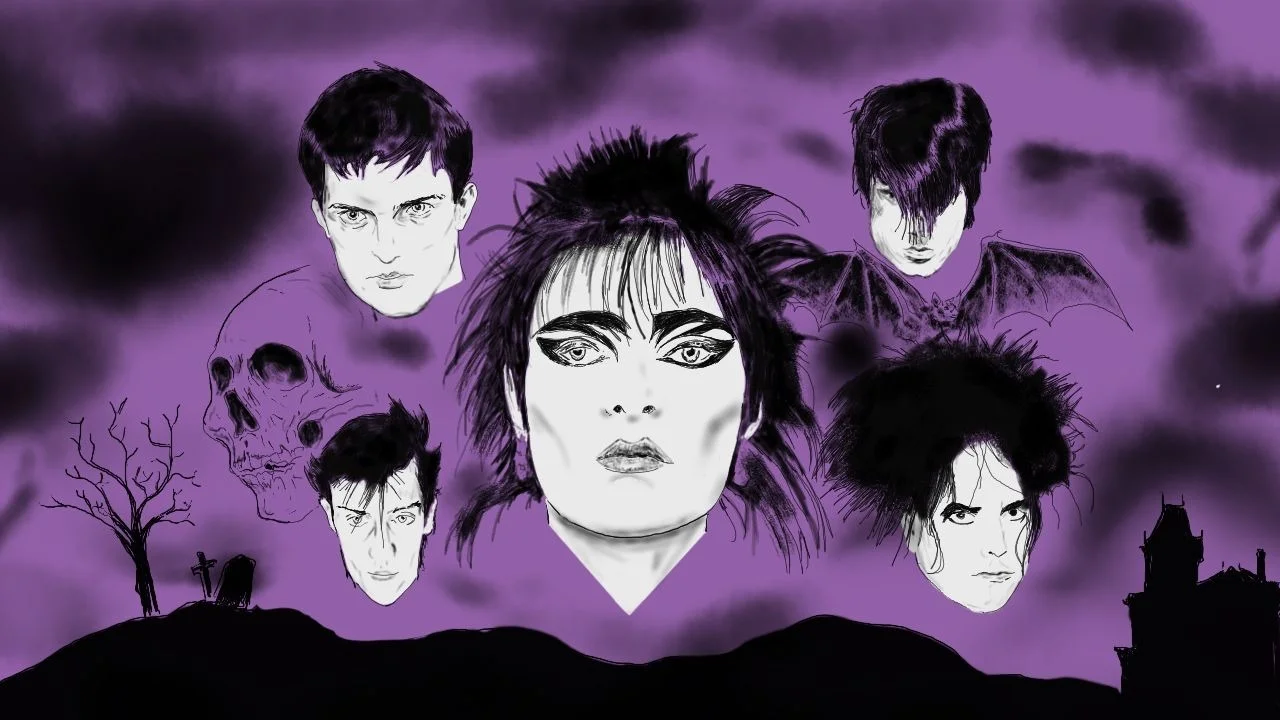
How post-punk and darkwave have evolved – and where Feral Business falls in line with them. When trying to understand Feral Business, you need to first understand the lineage. Post-punk Darkwave Industrial Dance Rock These genres were not designed by committees. They were designed by the friction – the political turmoil, cultural changes, and artistic revolution. And decades later, the way they continue to evolve still affects the underground. Let's see how all of this ties together.
🖤 What Is Post-Punk?
Post-punk came into existence in the late 1970's in response to punk rock's raw simplicity.
While punk was fast and frenzied, post-punk became angular, atmospheric, and experimental. Instead of aggressive three chord attacks, post-punk focused on: Repetitive basslines Robotic drum patterns Chorus-soaked guitars Minimalist arrangements Introspective or political lyrics Bands used mood as much as intensity. Space became part of the sound. Post-punk was more than just rebellion - it was controlled tension.

🌒 The Rise of Darkwave
In the 1980's, darker tones rose to the surface. Synthesizers gave emotions more depth. Reverb added to the atmosphere. The overall tone changed from urgent grit to immersive darkness. Darkwave pulled from post-punk but added: Brooding melodies Electronic instrumentation Gothic visual aesthetics Danceable but melancholy rhythms Darkwave kept the pulse - but draped it in emotion. The dance floor became darker, but it didn't stop moving.
⚙ Industrial & Electronic Crossover
As electronic production evolved, post-punk and darkwave started to merge with industrial and electronic dance music influences. Drum machines replaced live kits. Synth bass replaced guitar leads. Textures became distorted, layered, and mechanical. This is where things begin to seem familiar. The contemporary underground doesn't divide genres as record stores once did. Instead, it combines them.
🔥 Where Feral Business Fits
Within the 1st Drop Music ecosystem, Feral Business represents the dark side of rhythm-driven music. Feral Business shares similarities with post-punk: Solid rhythmic bass foundation Controlled tension Minimalist emotions It shares characteristics with darkwave: Brooding atmosphere Layered synths with an emphasis on goth aesthetics And it includes contemporary elements: Electronic dance pulse Industrial textures Contemporary production quality Feral Business isn't a nostalgic revival. It's an extension of the history of post-punk.
🎛 Modern Darkwave & Dance Rock
Contemporary alternative scenes reward hybrid artists. When someone asks about an artist, they aren't asking if they are post-punk or electronic. They are asking if the artist makes them feel something. Feral Business falls somewhere in the middle: Dark but able to dance Emotionally intense but aggressive Minimalist but layered Music created for red lights, underground clubs and late night drives.
🌵 Arizona Factor
Location matters. Arizona's independent music scene allows artists to experiment. Unlike coastal cities, artists in Arizona don't experience the same amount of pressure from the industry to stick with one genre. Feral Business uses the historical roots of post-punk and darkwave and then applies those roots through a modern Southwest perspective. The vastness of the desert meets the energy of the underground club. The end result is tension that has room to breathe.
🧬 Why these genres still matter
Post-punk and darkwave continue to exist because they represent: Disillusionment Independence Emotional complexity Dancefloor catharsis During times of cultural upheaval, these sounds appear again. They never truly leave - they evolve.
🎧 Final thoughts
If you are new to post-punk and darkwave, start by listening to some of the classic bands - but don't stop there. The future of the genre lies in artists who are willing to push boundaries. Feral Business isn't imitating the past - it's building on it. And that is exactly what post-punk was created to do.